
Lifestyle and Behavioral Factors in Lynch Syndrome Cancer Risk
Zacharia Foda, MD, PhD - CGA-IGC Meeting Planning Committee Member
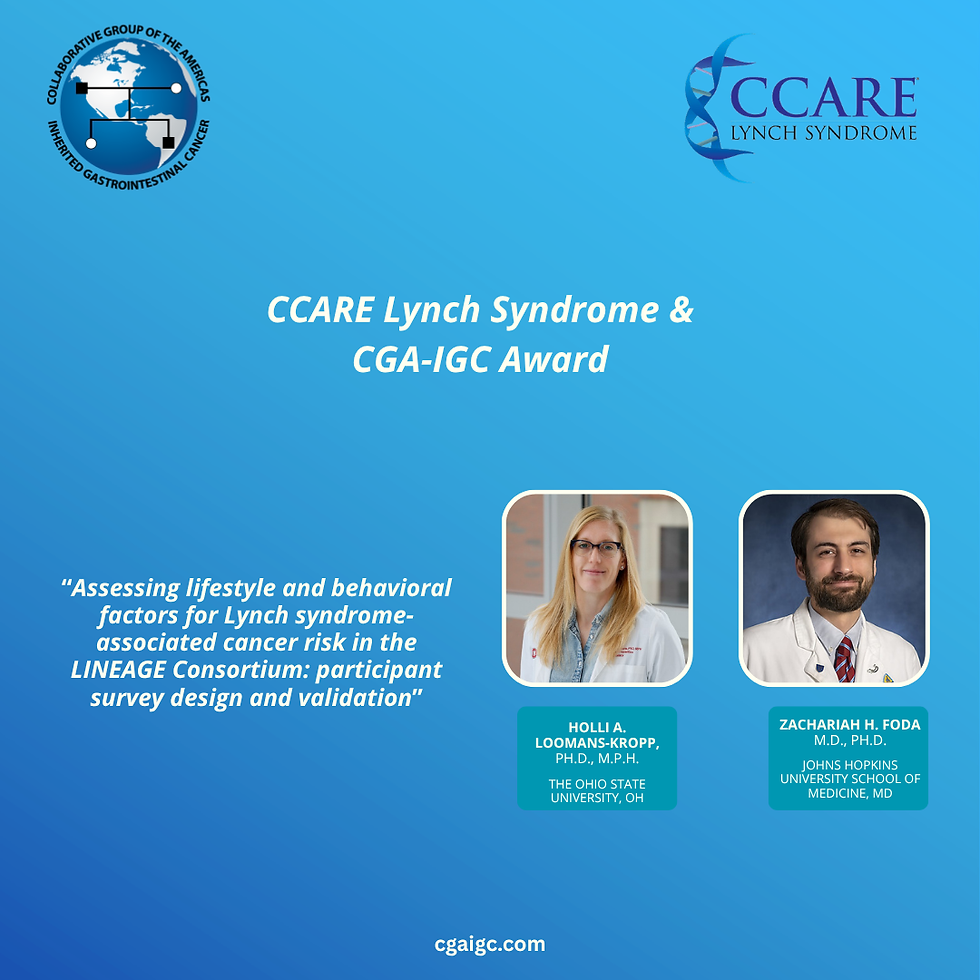
While evidence-based risk reduction strategies for Lynch syndrome such as surveillance, chemoprevention, and dietary measures exist, recent data have raised some questions about their effectiveness for cancer prevention. A critical limitation of these studies is the lack of information on adherence to risk reduction care and modifying factors like family history, lifestyle habits, and medication use.
To address this gap Dr. Holli Loomans-Kropp is leading a study within the LINEAGE (Lynch syndrome Integrative Epidemiology And GEnetics) Consortium infrastructure funded by the CCARE Lynch Syndrome (Colon Cancer Alliance for Research and Education for Lynch Syndrome) & CGA-IGC Research Award. The LINEAGE Consortium is building a prospective database, with over 20 sites across North America and growing, to quantify cancer risk while accounting for these often-overlooked variables.
The project aims to design and validate a patient-directed survey to gather information not easily obtained from electronic health records. This survey will collect details such as family history, dietary and exercise habits, tobacco and alcohol use, supplement intake, and aspirin use for chemoprevention, as aspirin is available over the counter and is often not consistently recorded in medical records.
The survey builds on validated instruments from NHANES, PLCO, NHIS, and the Colorectal Cancer Family Registry, adapted specifically for the Lynch syndrome population.
The ultimate goal is to move beyond one-size-fits-all risk estimates and toward a more nuanced understanding of how genetic and lifestyle factors interact in this population. This data could help identify which patients may benefit most from targeted interventions, and perhaps equally important, those who may not, enabling more personalized counseling and care. The information could also eventually be integrated into clinical education, as many patients want to understand what they can do to modify their risk through behavioral or lifestyle changes.
Many thanks to Drs. Holli Loomans-Kropp, PhD, MPH, and the LINEAGE consortium for their work advancing Lynch syndrome research, and to CCARE Lynch Syndrome for generous support of this important work.
Learn more about LINEAGE from a recent podcast featuring LINEAGE members Swati G. Patel, MD, MS and including Holli Loomans-Kropp, PhD, MPH and Zachariah Foda, MD, PhD. Listen to it HERE


Comments